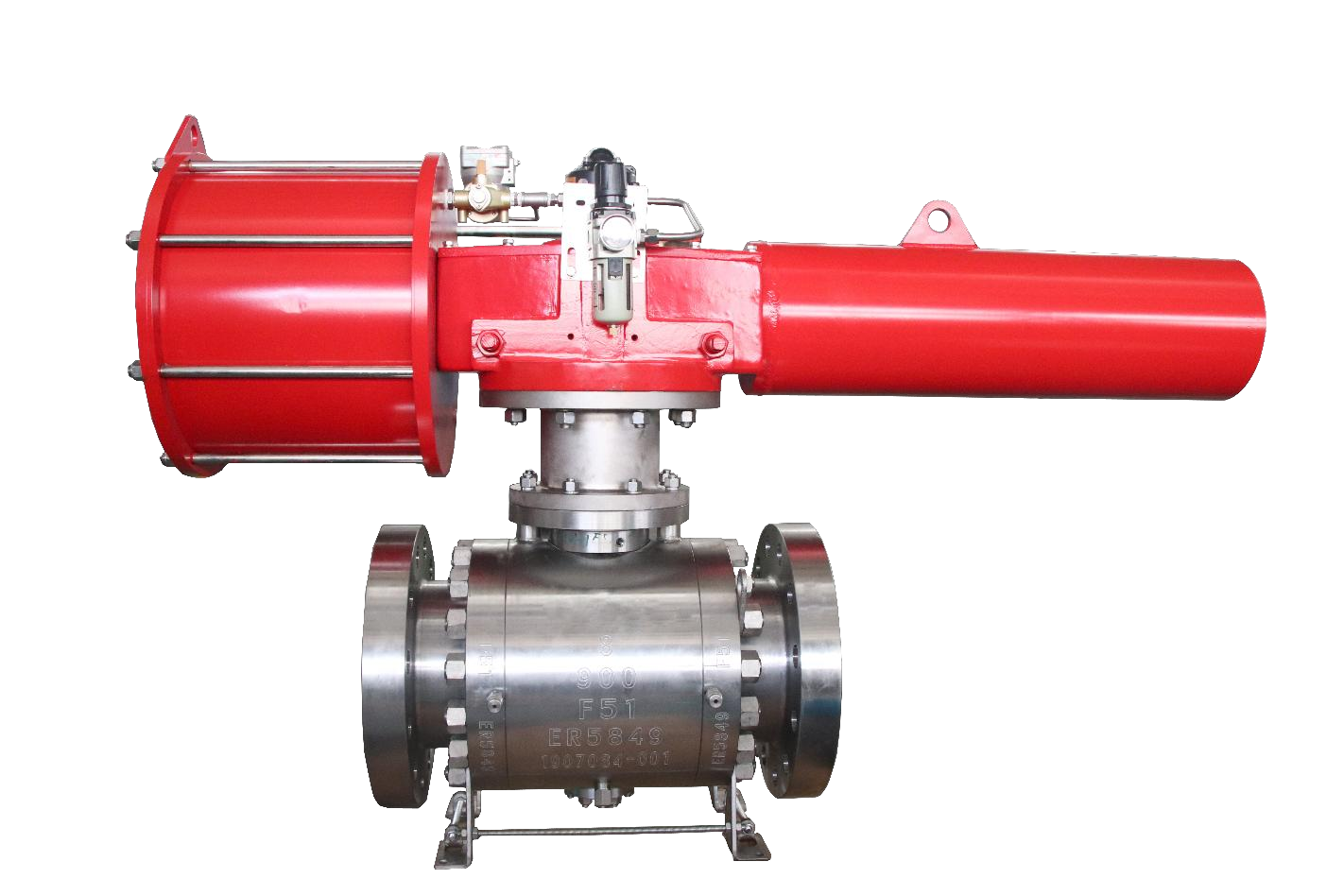
A floating ball valve uses line pressure to move the ball toward the downstream seat. The arrangement is compact and widely used for smaller sizes and many general process duties. Seat design, pressure differential and material selection determine the operating torque and sealing behavior.
A trunnion-mounted ball is mechanically supported at the top and bottom. Line pressure acts primarily on the seats, allowing the design to be applied across larger sizes and higher-pressure services. Trunnion constructions can also incorporate double-block-and-bleed, cavity-pressure relief, emergency sealing and other project-specific features.
The choice should not be made by pressure class alone. Review size, pressure-temperature envelope, bore requirement, shutoff direction, cycling, allowable torque, actuation, cavity relief, fire-safe requirement, fugitive-emission requirement, maintenance philosophy and the applicable product standard.
For an RFQ, state whether floating or trunnion construction is mandatory or whether the manufacturer may recommend a design. Include the service conditions and required evidence so the proposed construction can be assessed on a common basis.
Apply the guide to your valve requirement
Submit the operating conditions, construction, standards and required project documents for a specification-based review.
Submit RFQ