✓Baron
•Published: 2026-10-09•⏱ 6 min readFACTORY EVIDENCE · 100% REAL WORKSHOP
## What "Globe Valve Size" Actually Means on a Datasheet
Globe valve size is the nominal bore of the valve body, written as DN (metric) or NPS (inch), and it is meaningless on its own — a size is only valid when paired with a pressure class, a body material and an end connection.
A line item that reads only "2 inch globe valve" cannot be quoted, inspected or installed. The purchasing-relevant string is closer to: 2" (DN50), Class 300, ASTM A216 WCB body, 13% Cr trim, raised-face flange ends, BS 1873, gear or handwheel operated. Each of those fields changes the wall thickness, the flange dimensions and the test pressure, even though the bore stays the same.
For project work, size is the first filter and class is the second. A DN50 valve in Class 150 and a DN50 valve in Class 2500 share a nominal bore but not a single external dimension.
## Size Ranges We Supply and the Standards Behind Them
Our globe valve supply covers 1/2"–24" (DN15–DN600) across ASME Class 150–2500, with forged-body small sizes following API 602 and cast-body larger sizes following BS 1873, all dimensioned under ASME B16.34.
The split matters because it determines which standard governs the pressure–temperature rating, the minimum wall thickness and the required hydrostatic test. Forged steel globe valves in the small-bore range are typically built to API 602 with ASME B16.34 rating basis; cast steel globe valves from roughly 2" upward are commonly built to BS 1873. Angle-pattern bodies follow the same size logic but change the flow path rather than the bore.
Where a project specifies EN rather than ASME, the equivalent nominal sizes are expressed as DN with PN ratings, and the face-to-face dimensions come from the EN dimensional series rather than ASME B16.10. Mixing an ASME face-to-face valve into an EN piping layout is a common and avoidable field problem.
| Parameter
| Range A (Forged, Small Bore)
| Range B (Cast, Large Bore)
| Note |
| ---
| ---
| ---
| --- |
| Nominal size | 1/4"–2" (DN8–DN50) | 2"–24" (DN50–DN600)
| Overlap at DN50; confirm body construction on the datasheet |
| Pressure class
| Class 150–2500 / PN16–PN420
| Class 150–2500 / PN16–PN420
| Class is a rating basis, not a test pressure |
| Governing product standard
| API 602
| BS 1873
| Both reference ASME B16.34 for rating and wall thickness |
| Rating basis
| ASME B16.34
| ASME B16.34
| Pressure–temperature tables drive allowable service limits |
| End connections
| NPT, SW, BW, RF
| RF, RTJ, BW
| End type must match the piping spec, not just the size |
| Typical operation
| Handwheel, small actuator
| Handwheel, gear, pneumatic actuator
| Actuator sizing depends on differential pressure and stem thrust |
| Test standard
| API 598
| API 598
| Shell and seat test durations scale with size and class |
## Reading the Size/Class Matrix Without Getting It Wrong
A larger nominal size does not automatically mean a higher-pressure valve, and a higher class does not automatically mean a larger valve — the two axes are independent and must be specified together.
Three practical checks before a globe valve size is released for quotation:
1. **Match the bore to the line size, not the pipe OD.** For metric projects, DN is nominal; the actual bore and the flange bolt circle come from the dimensional standard, and a DN50 valve from one dimensional series may not bolt to a DN50 flange from another.
2. **Confirm the class against the design pressure–temperature pair.** Class 150 at ambient is not the same allowable pressure as Class 150 at 400 °C. The ASME B16.34 pressure–temperature table, not the class number alone, sets the limit.
3. **Confirm the end connection against the piping spec.** RF, RTJ, BW, SW and NPT are not interchangeable at the same size and class, and the gasket or weld prep changes with each.
For throttling duty, size selection also interacts with trim. A globe valve sized for full-bore isolation but used at 20% opening will see accelerated seat and plug erosion; that is a trim and characterization question, not a size question, but it is decided at the same time.
## Engineering Solutions and QC for Sized Globe Valve Orders
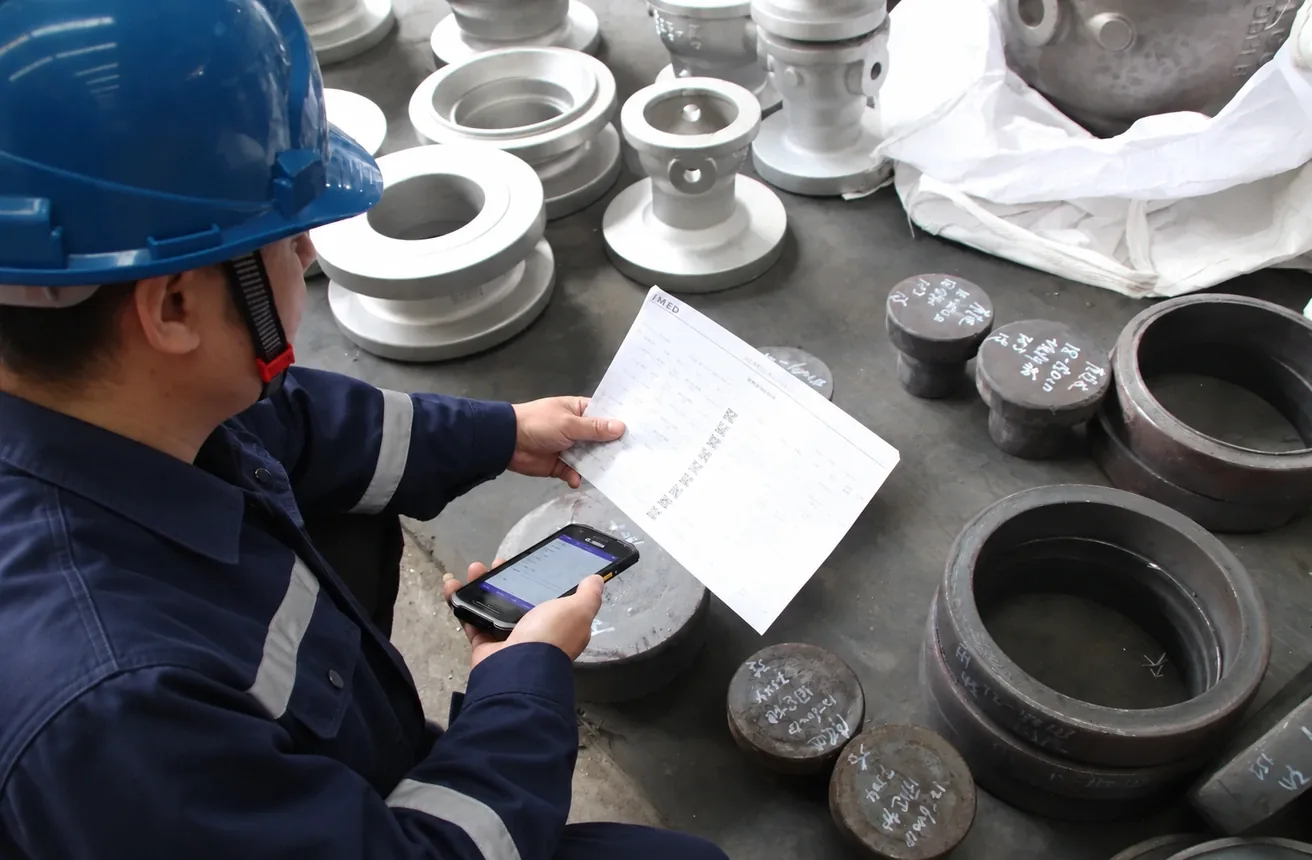
Every sized globe valve order is released against an agreed inspection and test plan, with shell and seat testing to API 598 and material traceability to EN 10204 3.1 MTR where specified.
What we control on a sized order:
- **Dimensional verification** against the nominated standard (ASME B16.10 face-to-face, ASME B16.5 or B16.47 flange dimensions, or the EN equivalent) before assembly release.
- **Pressure testing** — 100% hydrostatic shell and seat tests to API 598, with pneumatic testing where the project ITP calls for it. Test pressures are derived from the class rating at the specified test temperature, not assumed.
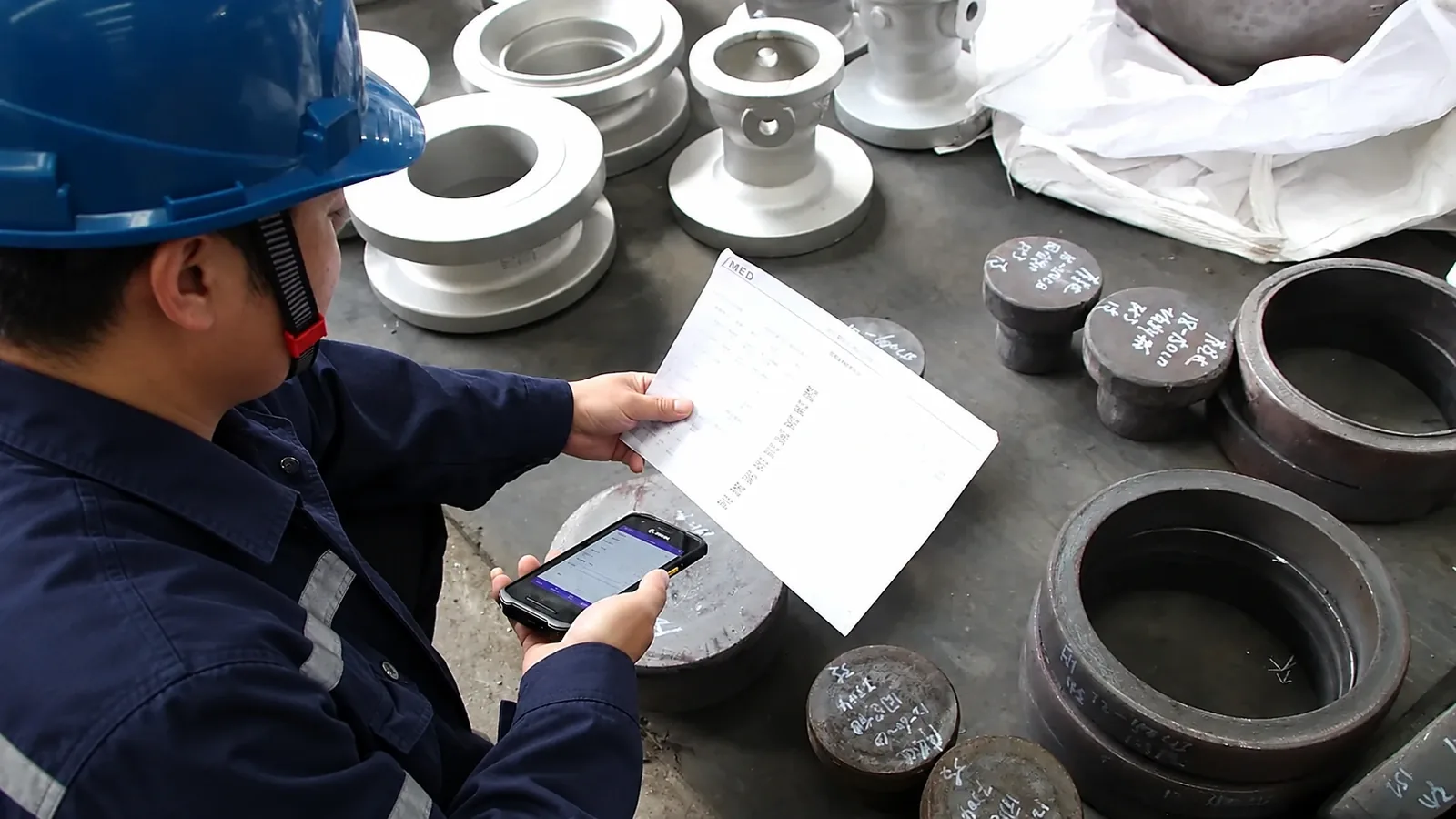
- **Material traceability** — heat-number tracking from mill certificate to finished valve, with EN 10204 3.1 MTR issued per agreed ITP.
- **Trim and seat verification** — seat and trim material confirmed against the approved datasheet before final assembly, since trim drives both erosion life and the achievable leakage class.
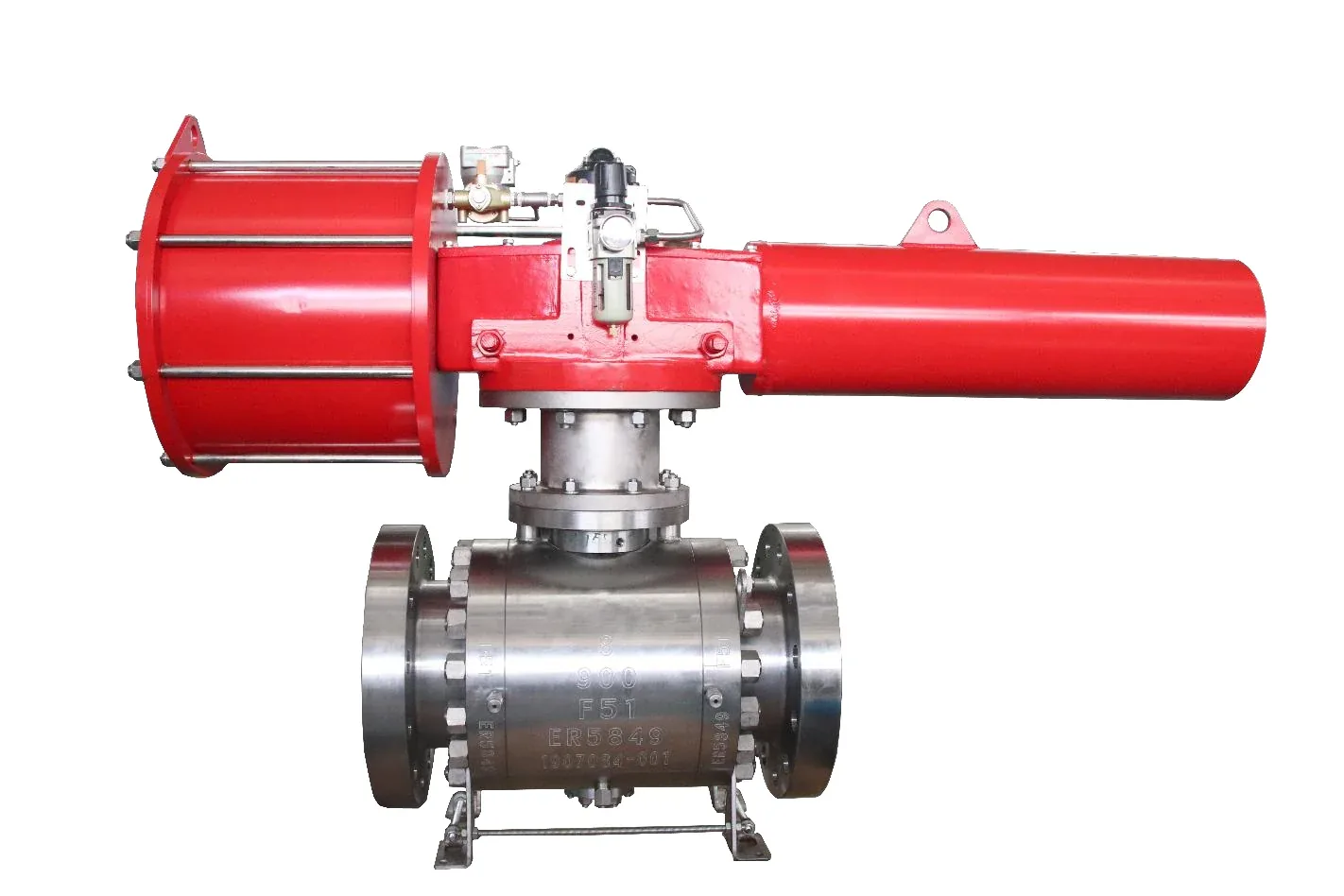
- **Actuator interface check** — for gear or pneumatic-operated valves, stem diameter, keyway and mounting flange are verified against the actuator vendor drawing at the sized condition.
Where a project requires simulation or FEA/CFD support, that work is performed only when it is inside the agreed technical scope; it is not offered as a default deliverable.
## FAQ
### Does a globe valve size include the pressure class?
No. Size and class are separate fields. A globe valve size is the nominal bore (DN or NPS); the class (150–2500) is a rating basis that sets wall thickness, flange dimensions and allowable pressure at temperature. Both must appear on the datasheet before the valve can be quoted or tested.
### What is the largest globe valve size available?
Our globe valve supply covers up to 24" (DN600) in cast-body construction, with forged-body valves typically in the 1/4"–2" (DN8–DN50) range. Above DN600, globe valves become unusual because the required operating torque and body weight make other valve types more practical for most isolation duties.
### Which standard governs globe valve face-to-face dimensions?
ASME B16.10 governs face-to-face and end-to-end dimensions for ASME-class globe valves; EN projects use the corresponding EN dimensional series. The governing product standard (API 602 for forged small bore, BS 1873 for cast steel) references the dimensional standard rather than replacing it.
### Can a globe valve be used for throttling at any size?
Globe valves are commonly selected for throttling, but sustained operation at low opening percentages accelerates seat and plug erosion regardless of size. Trim material and plug characterization matter more than nominal bore for throttling life, and both should be specified on the datasheet.
### What test applies to a sized globe valve before shipment?
API 598 shell and seat testing applies, with test pressure and duration derived from the valve size and class. Where the project ITP requires pneumatic testing or additional NDE, that is added to the plan and recorded on the test certificate.
Engineering Q&A
Technical FAQ & Design Criteria
Critical engineering answers referenced against API / ASME / ISO standards.
Does a globe valve size include the pressure class?↓
No. Size and class are separate fields. A globe valve size is the nominal bore (DN or NPS); the class (150–2500) is a rating basis that sets wall thickness, flange dimensions and allowable pressure at temperature. Both must appear on the datasheet before the valve can be quoted or tested.
What is the largest globe valve size available?↓
Our globe valve supply covers up to 24" (DN600) in cast-body construction, with forged-body valves typically in the 1/4"–2" (DN8–DN50) range. Above DN600, globe valves become unusual because the required operating torque and body weight make other valve types more practical for most isolation duties.
Which standard governs globe valve face-to-face dimensions?↓
ASME B16.10 governs face-to-face and end-to-end dimensions for ASME-class globe valves; EN projects use the corresponding EN dimensional series. The governing product standard (API 602 for forged small bore, BS 1873 for cast steel) references the dimensional standard rather than replacing it.
Can a globe valve be used for throttling at any size?↓
Globe valves are commonly selected for throttling, but sustained operation at low opening percentages accelerates seat and plug erosion regardless of size. Trim material and plug characterization matter more than nominal bore for throttling life, and both should be specified on the datasheet.
What test applies to a sized globe valve before shipment?↓
API 598 shell and seat testing applies, with test pressure and duration derived from the valve size and class. Where the project ITP requires pneumatic testing or additional NDE, that is added to the plan and recorded on the test certificate.
Tags:#globe valve sizes#globe valve size chart#globe valve DN NPS#globe valve pressure class#API 602 globe valve#BS 1873 globe valve#globe valve face-to-face dimensions
Share This Engineering Guide
Pass this technical specification and valve standard breakdown to your project procurement and piping design colleagues.