✓SMD Valve Engineering Team
•Published: 2026-10-14•⏱ 6 min read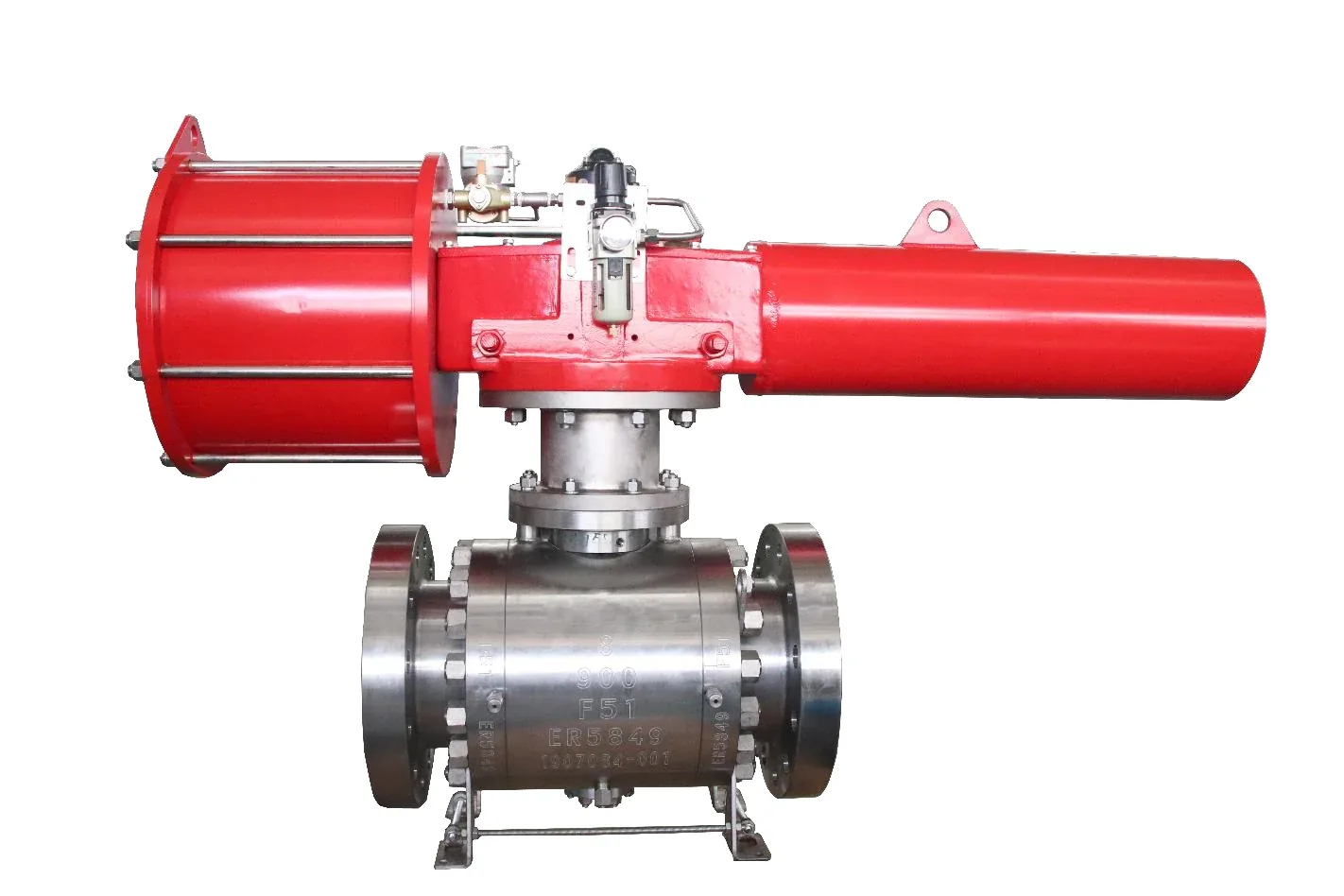
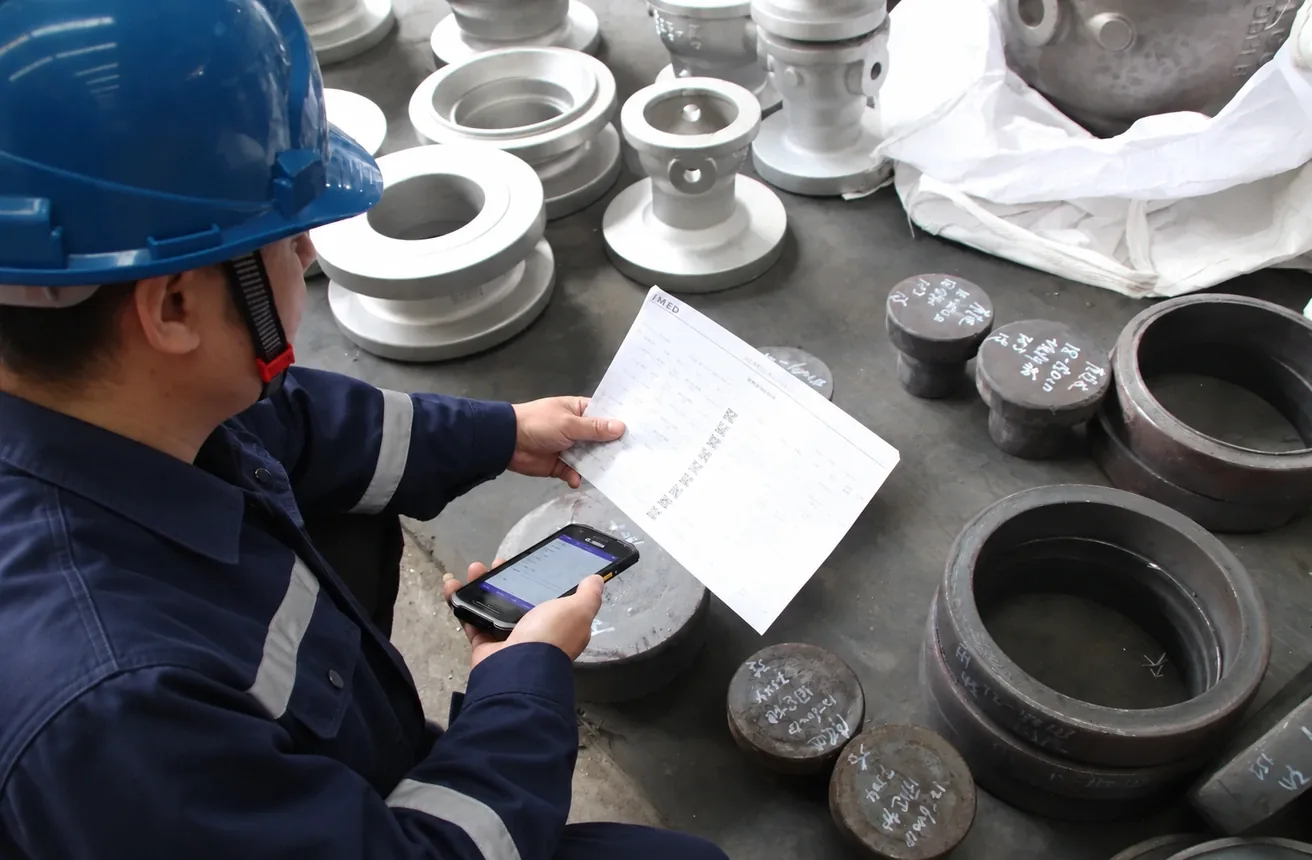
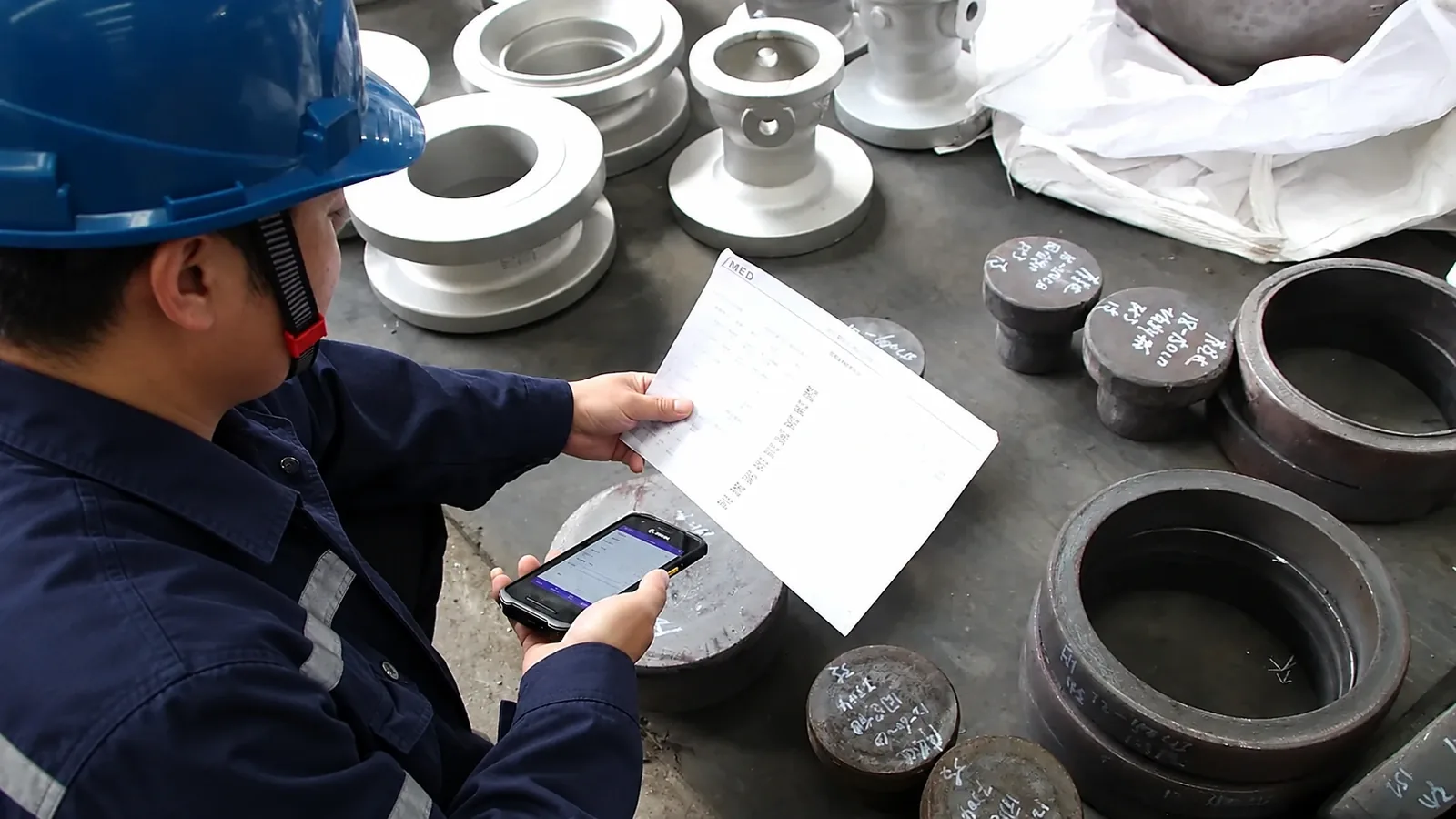
FACTORY EVIDENCE · 100% REAL WORKSHOP
API 6D trunnion mounted and floating ball valves serve distinct pressure-diameter envelopes in industrial piping: floating ball valves rely on upstream line pressure to force the ball against the downstream seat ring (typically NPS 1/2" to 6", Class 150 to Class 300), whereas trunnion mounted ball valves anchor the ball on upper and lower bearings with spring-energized seats, maintaining low breakaway torque across NPS 2" to 48" and Class 150 to Class 2500. Understanding API 6D trunnion vs floating ball valve selection prevents excessive seat wear, actuator oversizing, and fugitive emission failures.
## 1. Structural Mechanics & Breakaway Torque Under Differential Pressure
Floating ball valves transmit the entire fluid thrust load onto the downstream seat ring. As nominal diameter or differential pressure (ΔP) increases above Class 600, seat bearing stress rises sharply, accelerating PTFE or RPTFE cold flow and requiring oversized pneumatic or electric actuators.
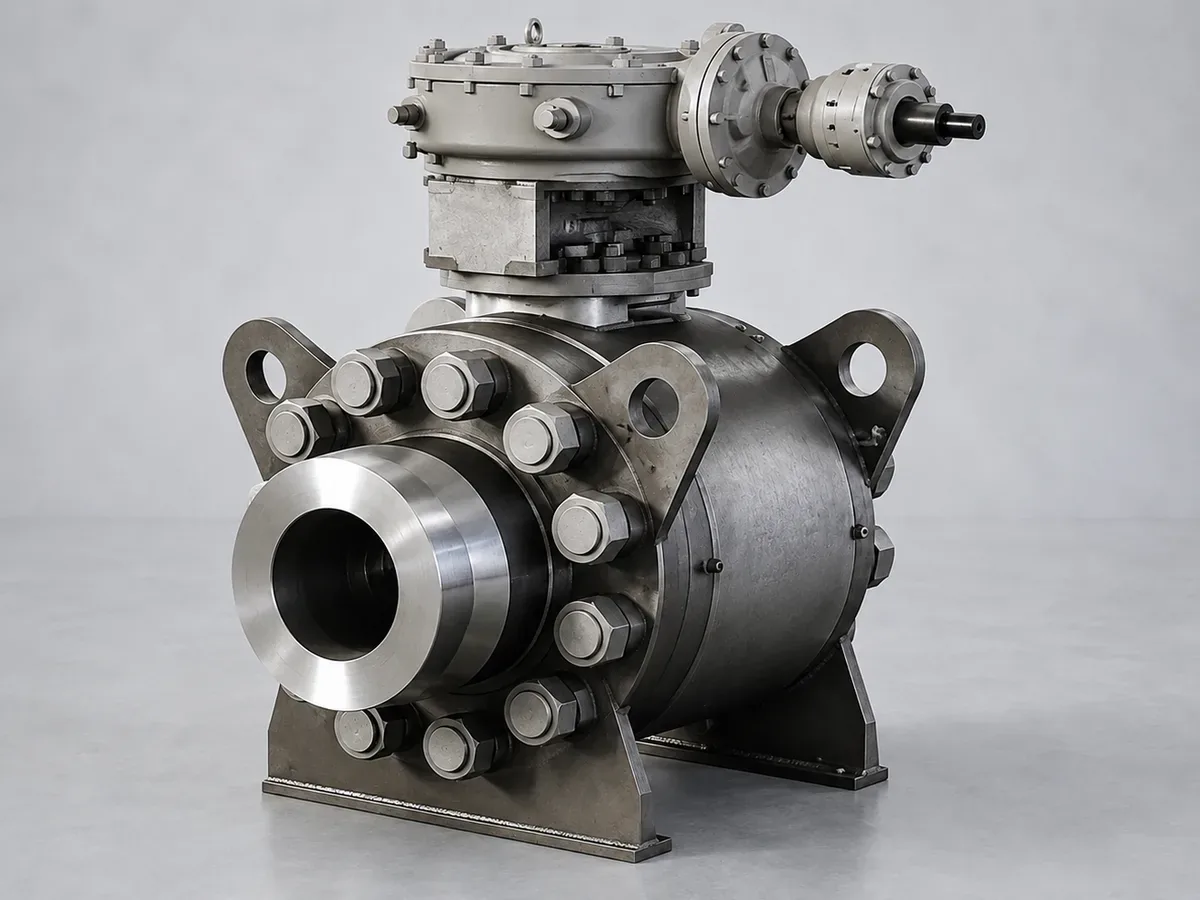
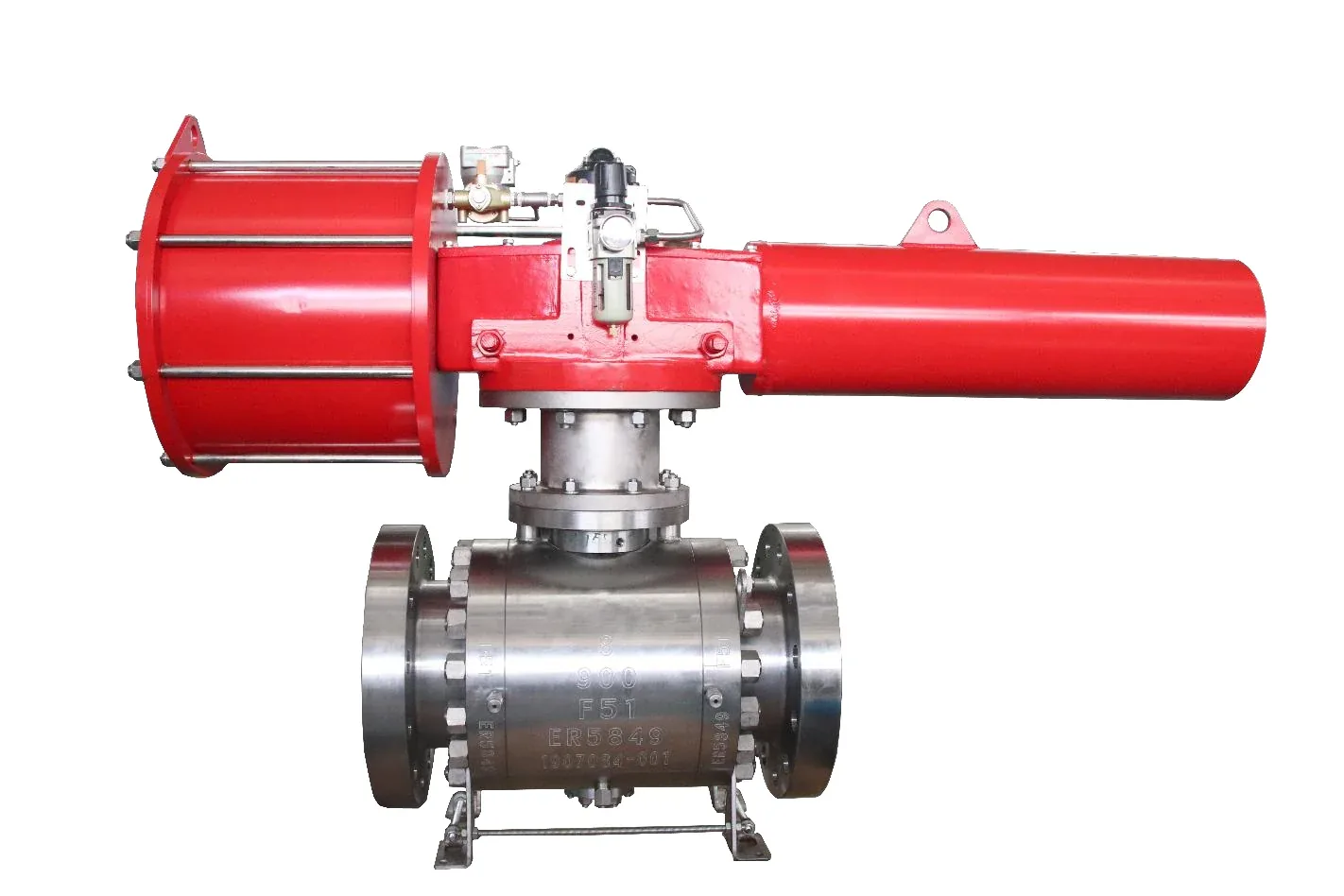
Trunnion mounted ball valves per API 6D and ASME B16.34 absorb hydraulic line thrust through the upper stem and lower trunnion plate into the valve body (ASTM A216 WCB, ASTM A105, ASTM A352 LCC, or ASTM A351 CF8M). Spring-loaded upstream and downstream seats establish bi-directional low-pressure sealing at 80±10 psi (5.5 bar) air test and high-pressure hydrostatic closure at 1.1× rated pressure per API 598.
| Engineering Parameter | Floating Ball Valve (API 608 / API 6D) | Trunnion Mounted Ball Valve (API 6D) | Engineering Selection Note |
| --- | --- | --- | --- |
| Size Envelope (NPS / DN) | 1/2" to 8" (DN15 to DN200) | 2" to 48" (DN50 to DN1200) | NPS >= 6" at Class >= 600 mandates trunnion design |
| Pressure Rating (ASME) | Class 150, Class 300 (Class 600 up to 2") | Class 150, 300, 600, 900, 1500, 2500 | Full bore or reduced bore per ASME B16.34 |
| Seat Sealing Mechanism | Downstream pressure-assisted seat deflection | Spring-energized + line-pressure piston effect (SPE / DPE) | Supports Double Block and Bleed (DBB) & DIB-1 / DIB-2 |
| Operating Torque at High ΔP | High (increases quadratically with DN and ΔP) | Low & stable (hydrostatic load carried by trunnion bearings) | Reduces pneumatic ESD / MOV actuator sizing by 35% to 50% |
| Shell & Seat Test Protocol | API 598 / ISO 5208 (1.5× shell, 1.1× seat) | API 6D & API 598 (1.5× shell, 1.1× seat + DBB cavity relief) | EN 10204 3.1 MTR with heat batch traceability |
## 2. STAMPED Condition Matrix: Sealing, Fugitive Emissions & Sour Gas Boundaries
In practical API 6D trunnion vs floating ball valve selection, engineering specifications must separate internal seat leakage, external stem fugitive emissions, and fire-safe containment rather than grouping them under an unverified "zero leakage" label:
- **Seat Leakage Classification (API 598 / ISO 5208 / ANSI/FCI 70-2)**: Soft seated configurations (Virgin PTFE, RPTFE, Nylon, or PEEK) achieve bubble-tight shutoff (ISO 5208 Rate A) within their rated temperature window (-29°C to +200°C). Metal seated ball valves with Tungsten Carbide (WC-Co) HVOF coating or Stellite 6 (AWS ERCoCr-A) hardfacing are engineered for high-temperature steam, catalyst fines, and abrasive slurry up to 425°C, typically specified to ANSI/FCI 70-2 Class V or Class VI under defined test pressure and medium.
- **Fugitive Emissions Control (ISO 15848-1 / API 624)**: For volatile organic compounds (VOC) and methane service, stem packing uses low-emission braided graphite with live-loaded Belleville disc springs and primary/secondary Viton or AED O-rings, verified to ISO 15848-1 Class BH or Class AH endurance cycles.
- **Fire-Safe Certification (API 607 / API 6FA / ISO 10497)**: Secondary metal-to-metal seat lips and graphite body/stem seals ensure that if polymer seat inserts sublimate during a plant fire, internal and external leakage remain within API 607 post-burn limits, accompanied by anti-static spring-plunger continuity (< 10 Ohms) between ball, stem, and body.
- **Sour Gas Service (NACE MR0175 / ISO 15156)**: For H2S-bearing gas pipelines, base materials (ASTM A105N, ASTM A350 LF2, or Duplex 2205 UNS S31803) and weld overlays undergo controlled heat treatment with Rockwell hardness strictly verified at <= 22 HRC on carbon/low-alloy steels.
| Service Condition | Recommended Valve Architecture | Body / Trim Material Pairing | Applicable Inspection & Test Standard |
| --- | --- | --- | --- |
| Natural Gas Transmission (Class 600–1500) | 3-Piece Forged Trunnion Ball Valve (DBB) | ASTM A105 / A350 LF2 Body + ENP/316SS Trim + Devlon/PEEK Seat | API 6D, API 607, ISO 15848-1, EN 10204 3.1 |
| Wet Sour Gas (H2S Partial Pressure >= 0.3 kPa) | Trunnion Ball Valve with Inconel 625 Overlay | NACE A350 LF2 (<= 22 HRC) + Inconel 625 Sealing Area + AED Seals | NACE MR0175 / ISO 15156-2, Ultrasonic & MPI NDE |
| High-Temp Steam & Abrasive Solids (<= 425°C) | Metal-Seated Trunnion or Floating Ball Valve | ASTM A216 WCB / A351 CF8M + HVOF Tungsten Carbide / Stellite 6 | ANSI/FCI 70-2 Class V / VI, API 598 High-Pressure Gas |
| Low-Pressure Utility & Chemical Skids (Class 150–300) | 2-Piece Cast Floating Ball Valve | ASTM A351 CF8M / CF3M + RPTFE Seat + Anti-Blowout Stem | API 608, ASME B16.34, API 598 Hydrostatic |
## 3. Single Piston Effect (SPE) vs Double Piston Effect (DPE) Cavity Relief
In trunnion mounted ball valves, seat rings can be configured as Self-Relieving Single Piston Effect (SPE) or Double Piston Effect (DPE) per API 6D:
- **SPE × SPE (Standard DBB)**: Both seats automatically relieve excess body cavity thermal overpressure back into the pipeline when cavity pressure exceeds 1.33× rating.
- **SPE Upstream + DPE Downstream (DIB-2)**: If the upstream SPE seat sustains damage, the downstream DPE seat continues to seal energized by cavity pressure; requires an external safety relief valve on the body cavity.
## 4. Actuation Sizing, Emergency Shutdown (ESD) & RFQ Procurement Checklist
When integrating pneumatic Scotch-yoke actuators for Emergency Shutdown (ESD) or electric multi-turn actuators (MOV) in API 6D trunnion vs floating ball valve selection, engineers should apply a minimum 1.3× safety factor for clean gas/liquid soft-seated trunnion valves and a 1.5× factor for metal-seated or dry gas service. If SIL 2 or SIL 3 functional safety loop compliance is required by project specifications, the valve, actuator, solenoid valve, and partial-stroke test (PST) positioner must be evaluated against IEC 61508 failure rate data and project-specific certificates.
To streamline engineering evaluation and RFQ quotation, buyers can cross-reference full dimensional catalogs in our [Industrial Ball Valve Series](/products/ball-valves/), review hydrostatic and NDT inspection procedures on our [Quality & Testing Capabilities](/capabilities/), download 3D CAD drawings in our [Technical Resources Center](/resources/), or submit project MTO datasheets directly via our [Engineering RFQ Desk](/contact/).
Engineering Q&A
Technical FAQ & Design Criteria
Critical engineering answers referenced against API / ASME / ISO standards.
At what size and pressure class should engineers switch from floating to trunnion ball valves?↓
Engineers typically transition from floating to API 6D trunnion mounted ball valves at NPS 6" (DN150) for Class 300, NPS 4" (DN100) for Class 600, and across all sizes for Class 900 to Class 2500 to prevent excessive seat bearing stress and high actuator breakaway torque.
Does ANSI/FCI 70-2 Class VI mean absolute zero leakage under all operating conditions?↓
No. ANSI/FCI 70-2 Class VI specifies a maximum permissible bubble leakage rate under standardized low-pressure air or nitrogen test conditions (3.5 bar / 50 psi). For bubble-tight high-pressure shutoff, specify API 598 / ISO 5208 Rate A soft seats or high-pressure gas seat testing per API 6D.
What is the difference between DBB and DIB-2 in API 6D trunnion ball valves?↓
A Double Block and Bleed (DBB) valve uses two Single Piston Effect (SPE) seats that seal against pressure from both ends while self-relieving body cavity overpressure. A DIB-2 valve combines one upstream SPE seat with one downstream Double Piston Effect (DPE) seat, maintaining downstream isolation even if the upstream seat leaks.
What metallurgical documentation is required for NACE MR0175 sour gas ball valves?↓
Sour gas valves require EN 10204 3.1 Material Test Reports (MTR) verifying chemical composition, NACE MR0175 / ISO 15156 heat treatment records, and hardness test charts confirming <= 22 HRC on carbon and low-alloy steel pressure-retaining parts and weld heat-affected zones.
Tags:#API 6D trunnion vs floating ball valve selection#API 6D trunnion ball valve#floating ball valve torque#sour gas NACE MR0175 ball valve#ISO 15848-1 fugitive emission#FCI 70-2 Class VI seat leakage
Share This Engineering Guide
Pass this technical specification and valve standard breakdown to your project procurement and piping design colleagues.
API 6D Trunnion vs Floating Ball Valve Selection Guide for High-Pressure & Sour Gas Service
Official engineering resource by SMD Flow Control