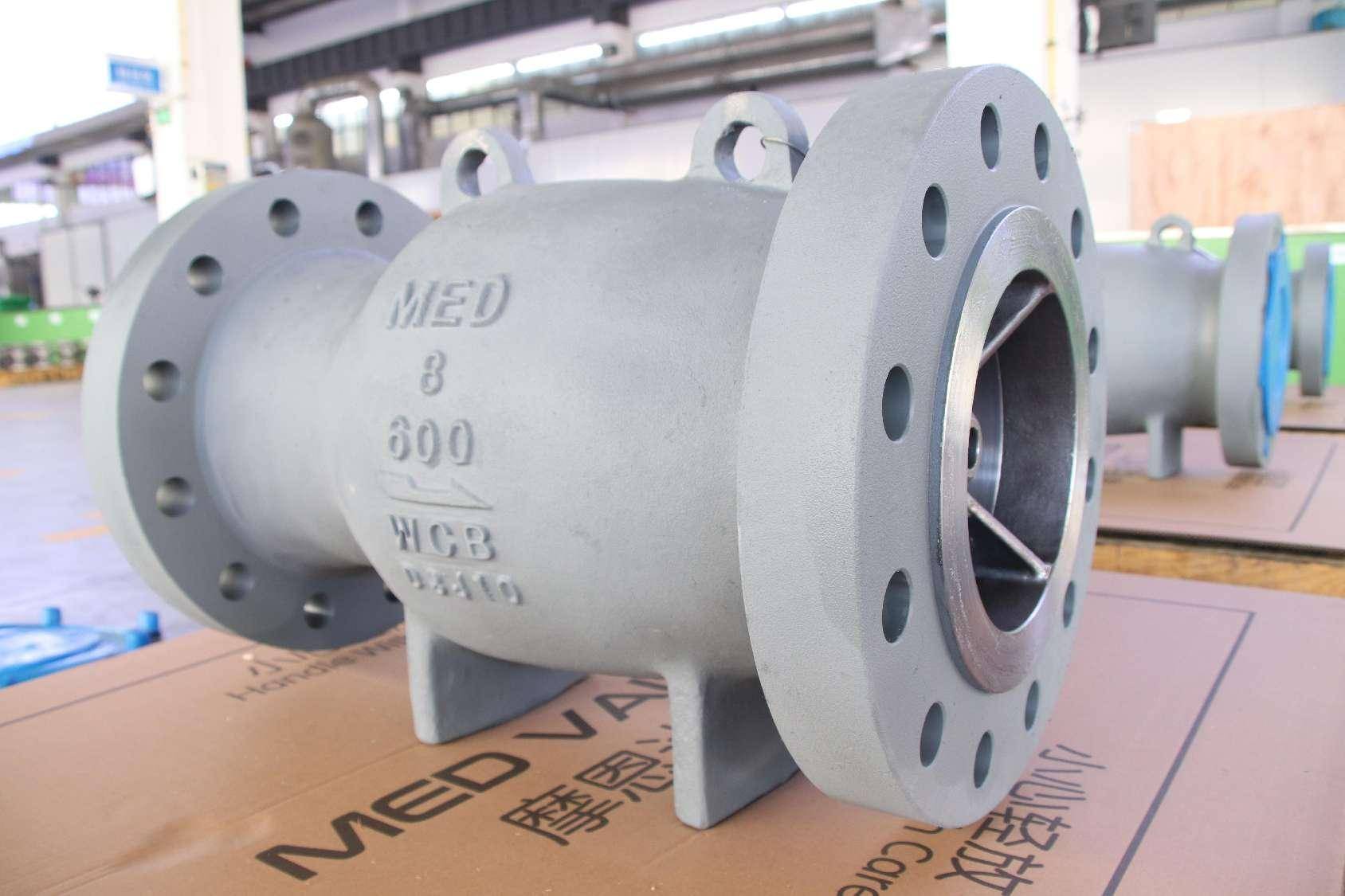
Check valves must close automatically as flow reverses, but different constructions respond at different speeds and with different pressure loss. A swing check provides a clear flow path and is common in many services, while a dual-plate wafer valve offers a compact installation envelope.
Tilting-disc and axial-flow designs can be considered where closing response and dynamic behavior are important. The correct choice depends on flow velocity, density, line size, system deceleration, pump or compressor behavior, installation orientation and allowable pressure drop.
Do not select only by line size and class. Define the normal and minimum flow, transient conditions, preferred orientation, cracking pressure, leakage requirement, end connection and maintenance access. For critical systems, the system designer should evaluate water-hammer and dynamic response.
The RFQ should also identify materials, product standard, inspection requirements and any special trim, spring or damping arrangement.
Apply the guide to your valve requirement
Submit the operating conditions, construction, standards and required project documents for a specification-based review.
Submit RFQ